GEO: What Actually Matters
(and What Doesn't)
Generative Engine Optimization is not SEO with a new name. It is a fundamentally different problem: probabilistic answers, not ranked links. Here is the mental model that actually matters.
Published Jun 2025 · Updated Mar 2026
The Mental Model Most People Get Wrong
Here is what most people think GEO is: SEO, but for AI. Find the right keywords, sprinkle them in, and your brand shows up in ChatGPT.
That is wrong. And it is wrong in a way that will waste your time and budget.
AI search does not rank pages. It generates answers. Every time a user asks a question, the model constructs a narrative response from scratch, drawing on training data, retrieval sources, and the specific context of the prompt. The same question asked twice can produce different answers, mention different brands, and cite different sources.
This is the fundamental insight: AI answers are probabilistic. There is no fixed position to rank for. There is only the likelihood that your brand appears in a given response, for a given persona, on a given model, at a given moment.
GEO is the practice of understanding and improving that likelihood.
Probabilistic Answers vs. Ranked Links
In traditional search, a query returns a deterministic list. Page one is page one. Your rank is your rank. You can measure it, track it, and optimize for it.
In AI search, a query returns a generated narrative. The model decides which brands to name, how to describe them, and which sources to cite. Run the same prompt ten times and you might get seven different brand lists. The model is not looking up a ranking. It is making a judgment call, every single time.
Traditional Search
- Deterministic ranked list
- One query = one set of results
- Measured by rank position
- User clicks through to your page
AI Search
- Probabilistic narrative response
- Same query = different answers each time
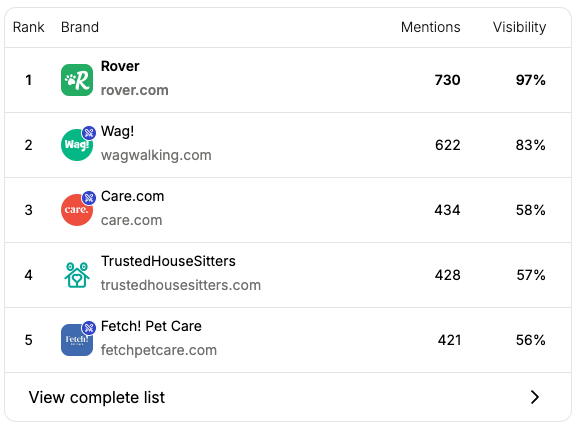
- Measured by visibility percentage across runs
- AI delivers the answer — user may never visit your site
What Actually Influences AI Answers
AI models do not use a simple algorithm you can reverse-engineer. But through extensive testing across millions of AI conversations, clear patterns emerge. Here is what actually moves the needle:
Training data corpus matters more than any single page
AI models form brand impressions from the totality of what they have seen during training — your website, reviews, press coverage, forum discussions, documentation, and competitor content. No single page optimization will override a weak overall presence.
Citation graph matters more than backlink profile
For retrieval-augmented models (Perplexity, Google AI Overviews, ChatGPT with browsing), the sources they actively retrieve and cite are the ones that shape responses. Being present on the sites and sources these models actually pull from is more important than traditional link building.
Content clarity matters more than keyword density
AI models prefer content that clearly states what your product does, who it is for, and why it is different. Structured, factual, unambiguous content gets cited. Marketing fluff gets ignored.
Context changes everything
The same brand can show up 90% of the time for one buyer persona and 10% for another. A CTO evaluating enterprise tools gets a completely different response than a freelancer evaluating budget tools. GEO must account for persona-level variation, not just aggregate numbers.
What Doesn't Matter (Despite What You've Heard)
The GEO space is new, and it is already filling up with bad advice. Here is what does not work, no matter how many LinkedIn posts claim otherwise:
"Prompt injection" tricks
Adding hidden instructions to your website hoping AI models will repeat them is not a strategy. It does not work reliably, violates most model guidelines, and will make your brand look foolish when discovered.
Single-answer screenshots as proof
Screenshotting one ChatGPT response that mentions your brand proves nothing. AI responses are probabilistic. A single result tells you nothing about your actual visibility. You need to measure across hundreds of runs, multiple models, and diverse personas.
Treating GEO like SEO with different keywords
There are no "AI keywords" to target. There is no "AI SERP" to rank on. If your GEO strategy looks like your SEO strategy with the word "AI" added, you are not doing GEO.
Paying for AI placements
You cannot buy your way into AI-generated answers (yet). Any vendor claiming they can guarantee AI placements is misleading you. What you can do is systematically improve the signals that influence AI model outputs.
The Three Levers You Actually Control
GEO is not about gaming AI models. It is about making your brand genuinely easier for AI to understand, trust, and recommend. There are three levers:
Content structure
Make your content clear, factual, and structured so AI models can parse and reference it. This is the foundation.
Learn about citations →Third-party presence
Get your brand accurately represented on the sources AI models actually cite — reviews, docs, forums, publications.
See competitive analysis →Monitoring and iteration
Measure your visibility systematically, track changes over time, and iterate based on real data. This is what separates guessing from GEO.
See our methodology →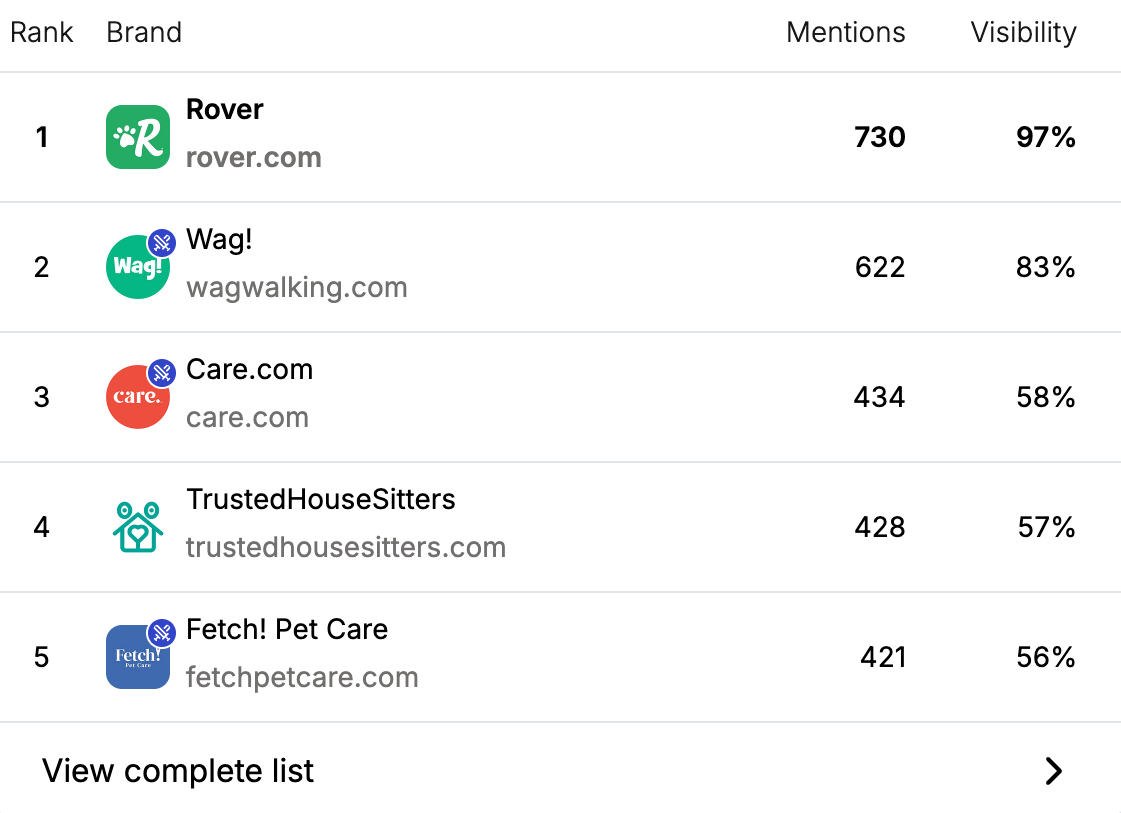
Ready to put this into practice?
The GEO 101 playbook walks you through how to measure your AI visibility and take action, step by step.
Read the GEO 101 PlaybookSee what AI says about your brand
Start monitoring your visibility across ChatGPT, Gemini, Claude, Perplexity, and more AI models.
Free to start · No credit card required