GEO 101: Measure and Improve AI Visibility
This is not a definitions page. If you need the mental model, read What is GEO first. This is the playbook: five steps to measure your AI visibility and take action.
Published Jun 2025 · Updated Mar 2026
Establish Your Baseline
Before you can improve anything, you need to know where you stand. This means running your first AI visibility report with real buyer personas.
Define your personas. These are not marketing segments. They are specific buyer profiles that describe the people asking AI for recommendations in your category. Be concrete: "VP of Engineering at a 200-person SaaS company evaluating project management tools for a newly remote team" is a persona. "Small business owner" is not.
Pick your models. Start with the models your buyers actually use. At minimum: ChatGPT, Google Gemini, and Perplexity. Add Claude, DeepSeek, and Grok for a more complete picture.
Run the scan. Gumshoe generates prompts from your personas and runs them across your selected models. The result is a statistical picture of your visibility — not a single snapshot, but an aggregate across hundreds of conversations.
Read the Results Like a Practitioner
Your report lands. Here is how to read it without getting lost in the data:
Overall visibility score tells you the percentage of AI conversations where your brand was mentioned. If you are at 15%, your brand shows up in roughly 1 out of 7 AI responses for your category. That is your starting number.
Model-level breakdown shows where you are strong and weak. You might be at 40% on Perplexity (which cites web sources heavily) but 5% on ChatGPT (which relies more on training data). This tells you where to focus.
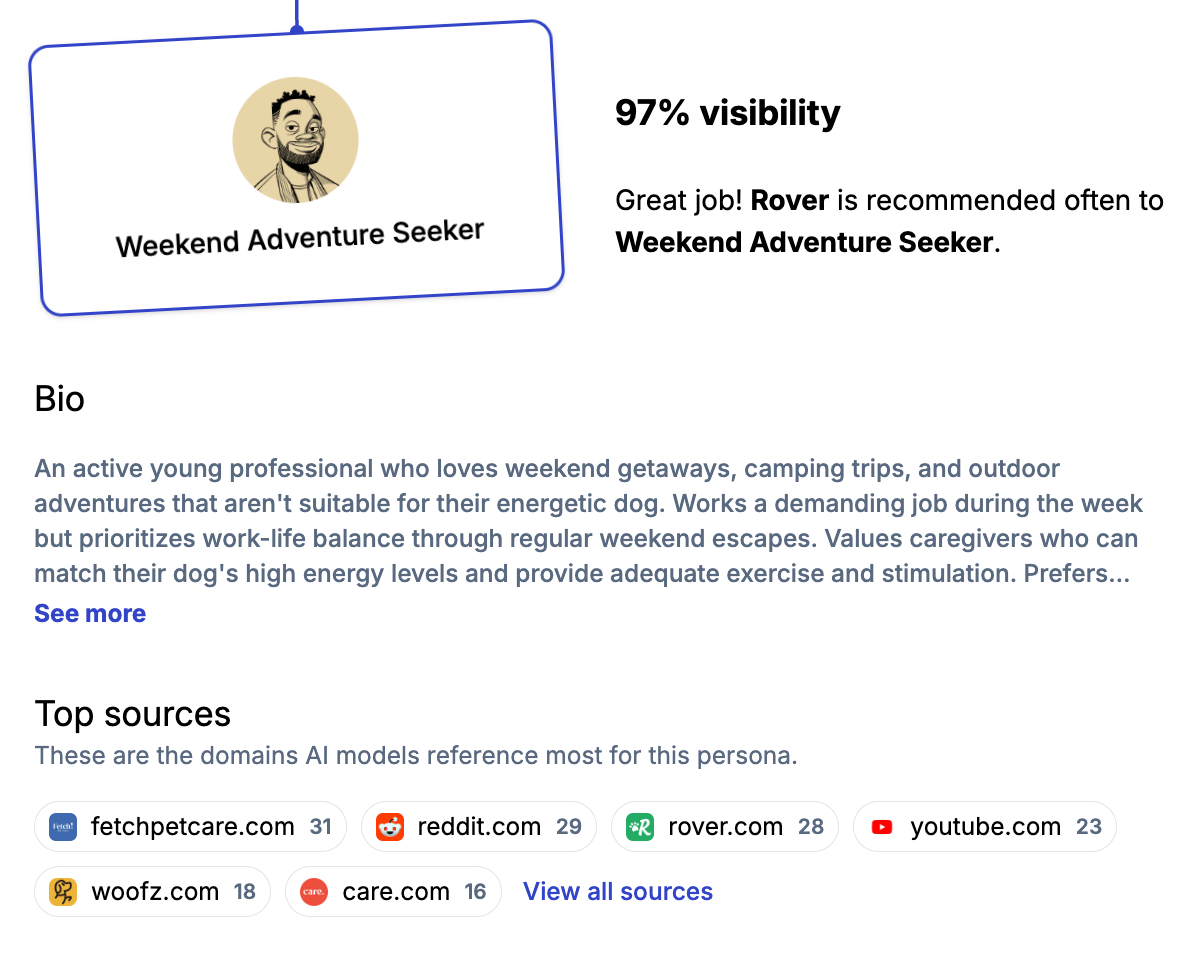
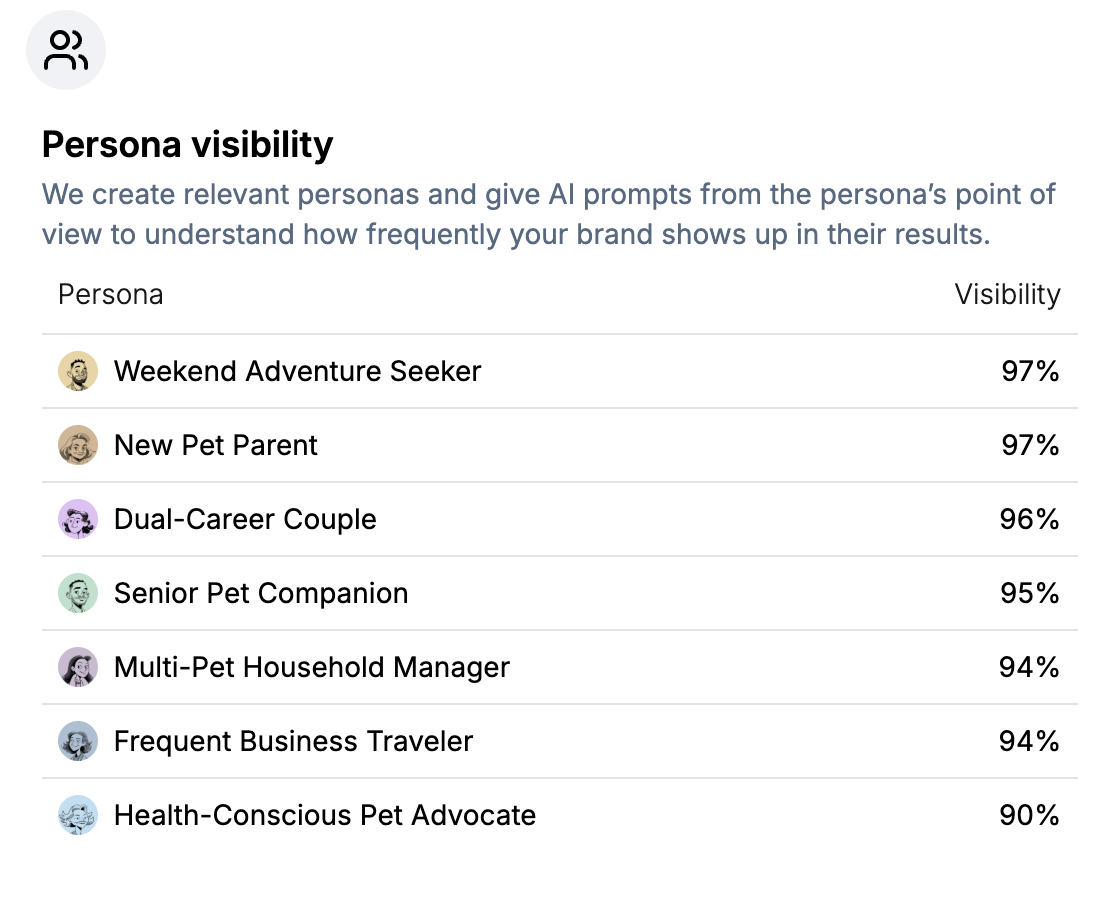
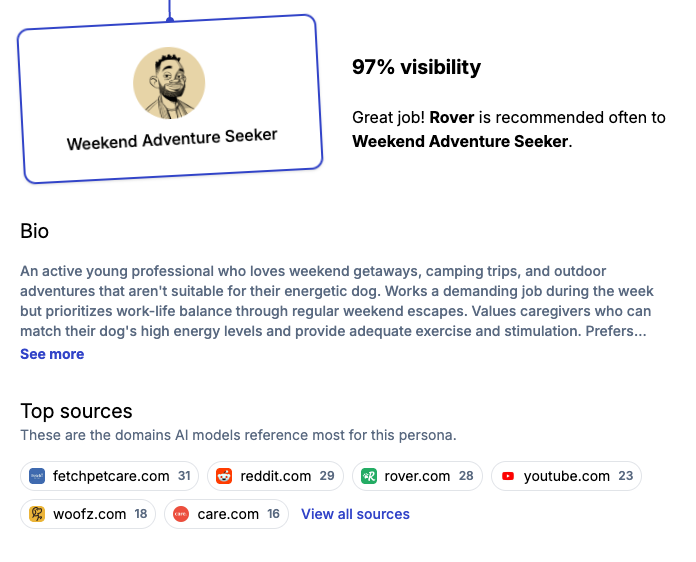
Persona-level breakdown is where the real insights live. You might be well-known to enterprise buyers but invisible to small business owners. Or vice versa. These gaps are actionable.
Brand leaderboard shows your competitive position. Who appears most often? Who gets the most favorable descriptions? This is your competitive map.
Find Your Gaps
Not all gaps are equal. Use this priority matrix to decide where to focus:
Fix first
High-value persona + Low visibility
Your most important buyers are not finding you through AI. This is the biggest missed opportunity.
Investigate
High-value persona + High visibility but poor sentiment
You show up, but the AI describes you inaccurately or unfavorably. Fix the narrative.
Maintain
High-value persona + High visibility
You are winning here. Monitor to maintain your position and watch for competitive shifts.
Deprioritize
Low-value persona + Any visibility
These personas are not your target buyers. Do not waste resources optimizing for them.
Once you know where the gaps are, look at the citation sources. Which sources are AI models pulling from when they recommend your competitors? Are you represented on those sources? This is the bridge between diagnosis and action. Read more about how citations work in AI search.
Take Action
Here is what to do with your gap analysis. Three categories of action, in priority order:
A. Optimize existing content for AI discoverability
- Add clear, factual comparison sections to your key landing pages. AI models love structured comparisons.
- Include FAQ sections with concrete answers. These are directly quotable by AI models.
- State your differentiators explicitly and factually. "We serve 10,000 customers" beats "We are the leading platform."
B. Build citation-worthy new content
- Create definitive guides in your category that AI models will want to cite. Original research, benchmarks, and data-driven analysis.
- Publish comparison pages that are genuinely useful (not just self-promotion). AI models prefer balanced assessments.
C. Strengthen third-party presence
- Get accurate, up-to-date listings on the review sites, directories, and publications that AI models actually cite in your category. Your citation report tells you exactly which ones.
- Engage in communities (Reddit, Stack Overflow, industry forums) where your brand is discussed. AI models treat these as signal sources.
Measure the Impact
GEO is not a one-time project. Set up scheduled monitoring and track your progress:
Monthly cadence works for most teams. Run the same personas and models each month to get comparable trend data. This is how you know if your actions are working.
What counts as real improvement? Because AI answers are probabilistic, small fluctuations are noise. Look for sustained directional changes over 2-3 reporting periods. A jump from 15% to 25% visibility that holds across two months is meaningful. A one-time spike to 30% that drops back to 18% is not.
Track competitive shifts. Your visibility does not exist in isolation. If your competitor goes from 40% to 60%, your relative position has changed even if your absolute numbers stayed flat. The competitive leaderboard makes this visible.
Quick-Start Checklist
Define 3-5 buyer personas with specific roles, industries, and evaluation criteria
Run your first AI visibility report across at least 3 models
Identify your top 3 gaps using the priority matrix (high-value persona + low visibility)
Review citation sources — find where competitors are cited and you are not
Take action: optimize one key page, create one citation-worthy asset, update one third-party listing
Schedule monthly monitoring to measure the impact and track competitive shifts
Want to understand how the data is collected?
Our methodology page explains API-based model access, persona-driven testing, and how we handle the non-determinism problem.
Read Our MethodologyRun your first AI visibility report
See how AI models describe your brand across ChatGPT, Gemini, Claude, Perplexity, and more. Your first 3 reports are free.
Free to start · No credit card required