How to See Why Competitors Win in AI Answers
AI models are picking winners in your category right now. Every time a buyer asks for a recommendation, the AI decides who to name and who to skip. Here is how to see why — and what to do about it.
Published Jun 2025 · Updated Mar 2026
The Anatomy of an AI Recommendation
When a buyer asks an AI model "What is the best project management tool for a remote engineering team?", the model constructs a narrative response. It selects brands to mention, decides how to describe each one, and (in retrieval-augmented models) cites specific sources to support its claims.
Competitive benchmarking in AI search means decomposing that response:
Which brands appeared? The model named 5 brands. Your competitor was #1. You were #4. Two brands you had not considered were #2 and #3.
How were they framed? Your competitor got "best for distributed teams with complex workflows." You got "also worth considering." The framing matters as much as the mention.
What sources were cited? The model cited G2 reviews, a TechCrunch article, and a Reddit thread. Your competitor had strong presence on all three. You did not.
How consistent is this across personas? For the "CTO at a 200-person company" persona, your competitor wins. For the "startup founder" persona, you win. These patterns are actionable.
Why the Winner Wins
The brand that wins in AI answers is not necessarily the biggest or the best-known. It is the one that AI models have the most reason to trust and recommend for a specific context. Four factors drive this:
Citation strength
The winner is well-represented on the sources AI models cite — review sites, authoritative publications, forums, documentation. If the AI retrieves sources and your competitor is there but you are not, the competitor wins.
Content clarity
The winner has clear, factual, unambiguous content that AI models can easily parse. Specific claims ("serves 10,000 teams") beat vague marketing ("leading platform for modern teams").
Source diversity
The winner appears across many different sources — not just their own website. Reviews, press coverage, community discussions, comparison sites, and documentation all contribute to the AI's confidence.
Contextual fit
The winner's content explicitly addresses the specific persona and use case the buyer is asking about. Generic positioning loses to specific positioning in AI responses.
How to Take It Back: The Tactical Playbook
1. Identify which prompts your competitor wins
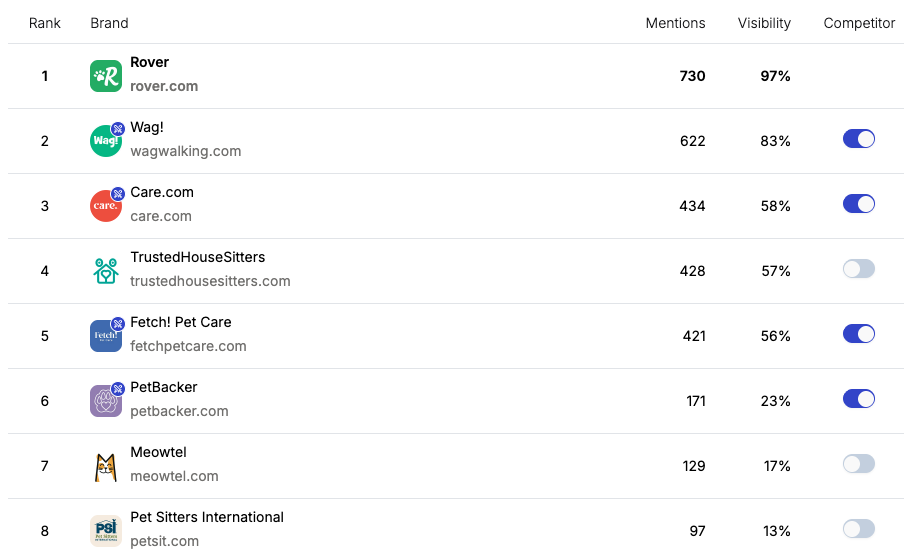
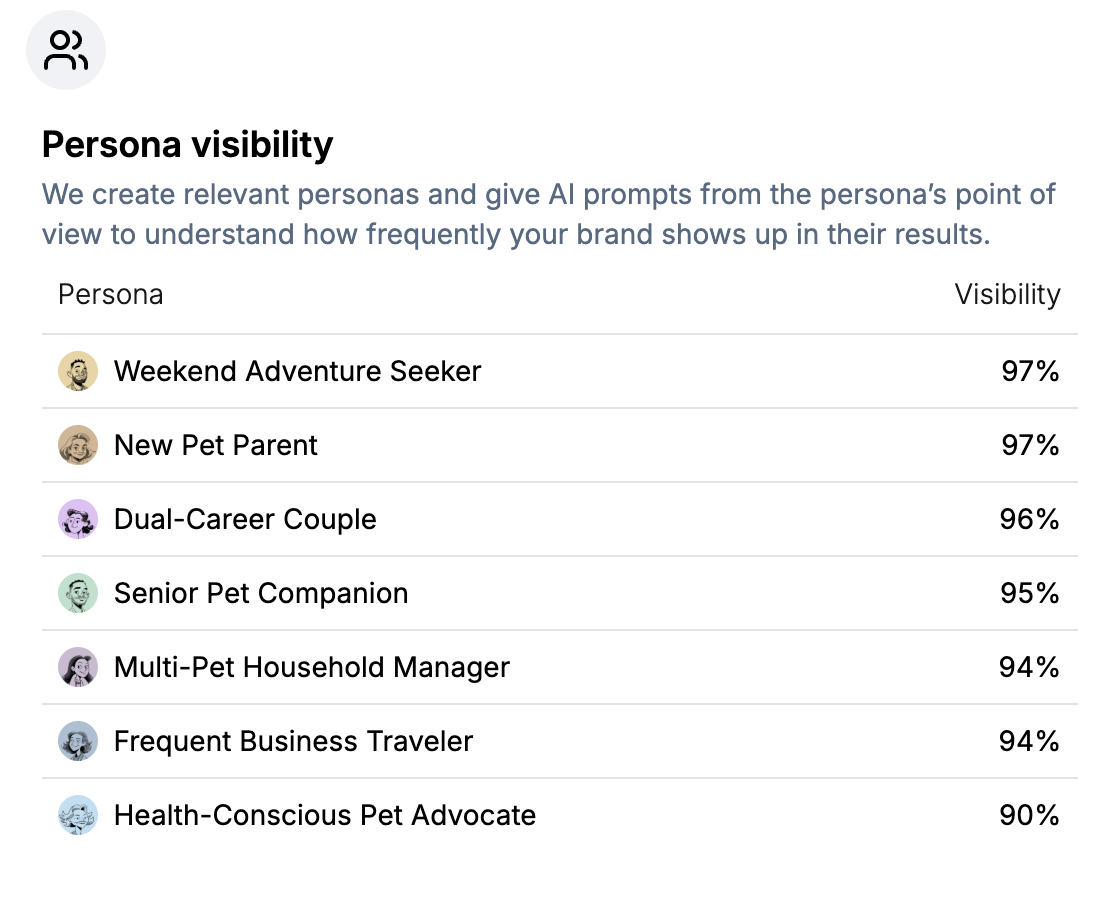
Your Gumshoe report shows visibility broken down by persona and prompt topic. Find the specific contexts where your competitor dominates and you are weak. These are your target opportunities.
2. Study their citation sources
Look at which sources AI models cite when recommending your competitor. Are they on G2 with strong reviews? Featured in industry publications? Active on Reddit? Your citation report tells you exactly where they have presence that you lack.
3. Build content that addresses those contexts
If your competitor wins the "VP of Engineering evaluating tools for remote teams" persona, create content that directly addresses that use case — with specific features, case studies, and comparison data that AI models can reference. Read the GEO 101 playbook for detailed content tactics.
4. Strengthen your presence on cited sources
Get accurate, up-to-date profiles on the review sites, directories, and publications that AI models cite in your category. Contribute to community discussions. Earn press coverage. Every third-party mention is a signal that strengthens your position.
5. Monitor the shift
Set up scheduled reports to track whether your actions are moving the needle. Competitive positions shift — sometimes quickly after a model update, sometimes gradually as new content is indexed. Monthly monitoring catches both. Read about how trend tracking works.
Competitive Benchmarking Is Not a One-Time Thing
AI model outputs change as models are updated, new content is indexed, and competitors adjust their strategies. A competitive advantage you have today can erode in weeks if a competitor publishes strong content or earns prominent coverage.
Scheduled monitoring is the only way to catch competitive shifts before they become entrenched. By the time you notice a competitor dominating AI responses through manual spot-checking, they have likely been winning for months.
Understand the source layer driving competitive advantage
Citations are the hidden ranking factor in AI answers. Understanding which sources AI models trust is the key to winning competitive battles.
Read About AI CitationsSee who AI recommends in your category
Run a free competitive visibility report. See exactly where you stand against competitors across 11 AI models.
Free to start · No credit card required